

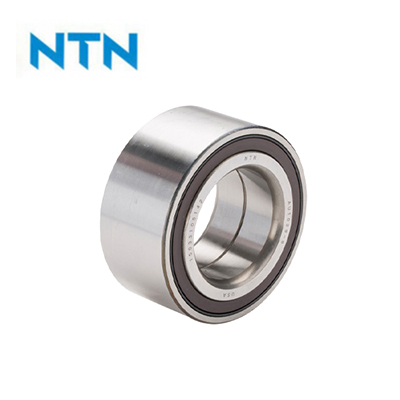
The primary function of the wheel hub bearing is to bear loads and provide precise guidance for the rotation of the wheel hub. It withstands both axial and radial loads, making it a critically important component. Conventional automotive wheel bearings comprise two sets of tapered roller bearings or ball bearings. The installation, lubrication, sealing, and adjustment of the bearing clearance are all performed on the automotive production line.
This configuration presents challenges in automotive assembly plants, resulting in high costs, poor reliability, and the necessity for bearing cleaning, lubrication, and adjustment during vehicle servicing. The hub bearing unit evolved from standard angular contact ball bearings and tapered roller bearings, integrating both bearing sets into a single unit. They offer advantages including superior assembly performance, elimination of clearance adjustment, reduced weight, compact design, high load capacity, pre-lubrication capability for sealed bearings, dispensing with external hub seals, and maintenance-free operation. They are now widely employed in passenger cars and are increasingly being adopted in commercial vehicles.
“Do you see over yonder, dear client, those tricky equipment bottlenecks, those wear-and-tear troubles that stall your production? I intend to arm your machines with genuine imported bearings—and stand by with technical support to slay every glitch that comes your way.”
— Hengzhou Bearings

leave a comment