

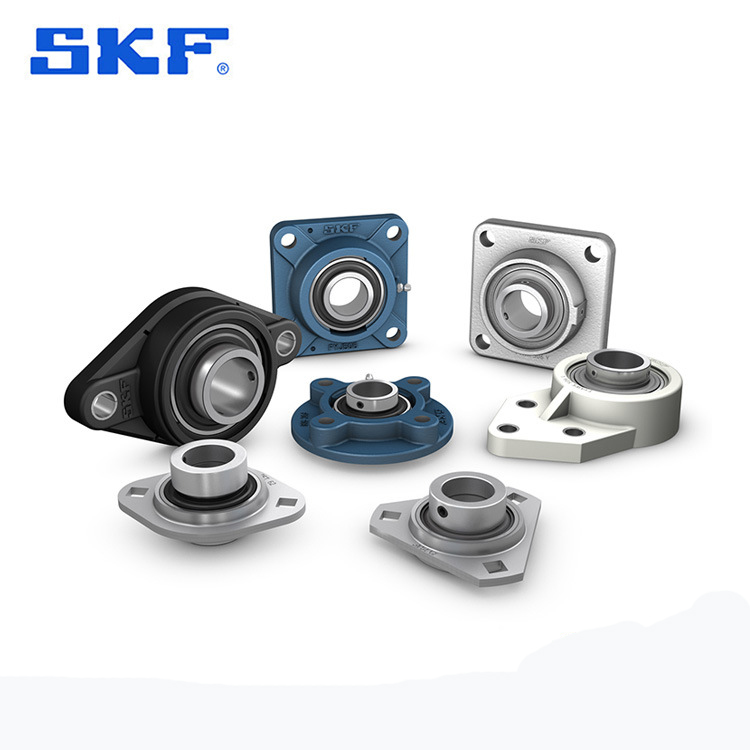
Spherical outer ring ball bearings are essentially a variant of deep groove ball bearings, characterised by their spherical outer ring surface. This allows them to fit into a corresponding concave spherical surface within the bearing housing, thereby achieving self-alignment. Primarily designed to handle combined radial and axial loads where radial loads predominate, these bearings are generally unsuitable for bearing axial loads alone.
Although their fundamental performance should be comparable to deep groove ball bearings, these bearings are predominantly employed in relatively coarse machinery. Installation and positioning are often imprecise, with poor alignment between the shaft and housing bore axes, or situations involving long shafts with significant deflection. Furthermore, the bearings themselves lack high precision, and some feature relatively crude construction. Consequently, their actual performance falls considerably short of that of deep groove ball bearings of the same specification. For instance, spherical plain bearings with set screws are employed on shafts with poor rigidity and high deflection. These bearings feature seals on both sides to effectively prevent contamination ingress and are pre-filled at the factory.
A suitable quantity of lubricant is provided; no cleaning or additional lubrication is required prior to installation. When tightening the set screw on the protruding end of the bearing inner ring onto the shaft, the permissible axial load must not exceed 20% of the rated dynamic load.
Spherical plain bearings with an eccentric sleeve exhibit performance characteristics essentially identical to those with a set screw, except that the set screw is located on the eccentric sleeve rather than the inner ring. Outer spherical ball bearings with tapered bores feature a 1:12 tapered bore. They can be directly mounted on tapered shafts or installed on smooth shafts without shoulders using a locking sleeve, allowing for fine adjustment of bearing clearance.
Outer spherical bearings are primarily suited for applications requiring simple equipment and components, such as agricultural machinery, transport systems, or construction machinery.
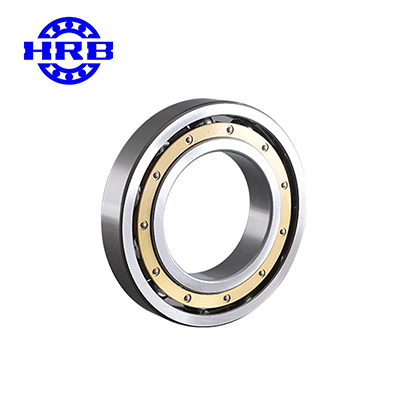
Primarily designed to handle combined radial and axial loads where radial loads predominate, these bearings are generally unsuitable for bearing axial loads alone. The inner ring (complete with full complement of rollers and cage) and outer ring can be mounted separately. This bearing type does not permit axial misalignment between the shaft and housing, and radial loading will generate additional axial forces. The magnitude of axial clearance in these bearings significantly impacts their operational reliability. Insufficient axial clearance leads to elevated temperature rise, while excessive clearance predisposes the bearing to damage. Therefore, particular attention must be paid to adjusting axial clearance during installation and operation. Where necessary, preload installation may be employed to enhance bearing rigidity.
“Do you see over yonder, dear client, those tricky equipment bottlenecks, those wear-and-tear troubles that stall your production? I intend to arm your machines with genuine imported bearings—and stand by with technical support to slay every glitch that comes your way.”
— Hengzhou Bearings

leave a comment